EasyA is a web3 technology company and education platform based in London (United Kingdom), founded in 2022 by Phil Kwok and Dom Kwok. EasyA was officially launched in 2022, focusing on web3 technologies. This community was influenced by the founders' experiences during the COVID-19 pandemic and early collaborations with universities and other educational institutions. Subsequently, the community was used as a foundation for developing Web3-related initiatives, including the organisation of EasyA's first Web3 hackathon in 2022. The EasyA app has over one million users and provides educational content on various blockchain technologies. EasyA Labs is a separate initiative focused on developing products intended to improve accessibility to cryptocurrency for a broader audience.
Real-time transcription
Real-time transcription is the general term for transcription by court reporters using real-time text technologies to deliver computer text screens within a few seconds of the words being spoken. Specialist software allows participants in court hearings or depositions to make notes in the text and highlight portions for future reference. Real-time transcription is also used in the broadcasting environment where it is more commonly termed "captioning." == Career opportunities == Real-time reporting is used in a variety of industries, including entertainment, television, the Internet, and law. Specific careers include the following: Judicial reporters use a stenotype to provide instant transcripts on computer screens as a trial or deposition occurs. Communication access real-time translation (CART) reporters assist the hearing-impaired by transcribing spoken words, giving them personal access to the communications they need day to day. Television broadcast captioners use real-time reporting technology to allow hard-of-hearing or deaf people to see what is being said on live television broadcasts such as news, emergency broadcasts, sporting events, awards shows, and other programs. Internet information (or Webcast) reporters provide real-time reporting of sales meetings, press conferences, and other events, while simultaneously transmitting the transcripts to computers worldwide. Other rapid data entry positions. == History == Before the advent of the stenotype machine, court reporters wrote official trial transcripts by hand using a shorthand system of stenoforms that could later be translated into readable English. It often took eight years of training to learn this manual form of writing at the necessary speed. Walter Heironimus was among the first stenographers to make use of the stenotype machine during his work in the U.S. District Court system in New Jersey in 1935. A "transcript crisis" arose during the later half of the twentieth century due to the increasing volume of lawsuits. There were not enough number of court reporters to match the increasing number of trials. Not only were court reporters unavailable to attend many court proceedings, court transcripts were constantly late and the qualities varied. Some believed it was due to the non-interchangeability between court reporters, and others believed it was simply due to a labor shortage. In the meantime, magnetic audiotape recording, or known as electronic recording (ER) began to threaten all reporters' job since it could record long-hour courtroom trials and replace a court reporter's position in the courtroom. As a result, machine translation (MT) intended to serve as a solution for preventing ER from potentially replacing reporters' jobs. However, MT relied heavily on human labors operating behind the system and many started to question if it should be the right way to end the "transcript crisis." Later in 1964, set up by CIA, the Automatic Language Processing Advisory Committee (ALPAC) was set to review whether MT was capable of solving this crisis. They concluded that MT had failed to do so. Then Patrick O'Neill, a skilled and experienced court reporter, stayed to work on the stenotype-translation project with CIA and developed the prototype CAT system. After adopting the CAT system in court-reporting community, CAT was brought into the television broadcasting system, aiming to provide captions for the deaf or hard-of-hearing communities. In 1983, Linda Miller developed a further use for the CAT system. She successfully translated a lecture live on the television screen and provided a transcript for students. This technique is known as Computer-Aided Real-time Translation, or CART. == Court reporter == It is the court reporter's job to note down the exact words spoken by every participants during a court or deposition proceeding. Then court reporters will provide verbatim transcripts. The reason to have an official court transcript is that the real-time transcriptions allows attorneys and judges to have immediate access to the transcript. It also helps when there's a need to look up for information from the proceeding. Additionally, the deaf and the hard-of-hearing communities can also participate in the judicial process with the help of real-time transcriptions provided by court reporters. === Education and training === The required degree level for a court reporter to have is an Associate's degree or postsecondary certificate. In order to become a court reporter, more than 150 reporter training programs are provided at proprietary schools, community colleges, and four-year universities. After graduation, court reporters can choose to further pursue certifications to achieve a higher level of expertise and increase their marketability during a job search. In most states, Certificates of Proficiency from the NCRA or from state agencies are now required certificates for court reporters to have in order to qualify for appointments. The NCRA aims to set the national standard for the certification of court reporters, and since 1937 it has offered its certification program which is now accepted by 22 states instead of state licenses. Court reporter training programs include but not limited to: Training in rapid writing skill, or shorthand, which will enable students to record, with accuracy, at least 225 words per minute Training in typing, which will enable students to type at least 60 words per minute A general training in English, which covers aspects of grammar, word formation, punctuation, spelling and capitalization Taking Law related courses in order to understand the overall principles of civil and criminal law, legal terminology and common Latin phrases, rules of evidence, court procedures, the duties of court reporters, the ethics of the profession Visits to actual trials Taking courses in elementary anatomy and physiology and medical word study including medical prefixes, roots and suffixes. Other than official court reporters, who are assigned to and work for a particular court, other types of court reporters include free-lance reporter, who either works for a court reporting firm or self-employed. They are different from official court reporters in that they have the chances to work on a wider range of assignments and work on basis of hourly wage. Hearing reporters work at governmental agency hearings. Legislative reporters work in law-making bodies. The demand for reporters is not limited in just the court settings. Reporters are also needed in conferences, meetings, conventions, investigations, and a variety of industries with needs for employers with real-time data entry skills. == Non-English transcription == Transcription services are universally necessary, so it is not limited to the English language. A stenographer's ability to transcribe languages beyond only English is especially valuable as society as a whole becomes increasingly multilingual. Education in non-English transcription demands a comprehensive understanding of the given language. Phonetic differences between English and other languages are a particular challenge in carrying English transcription skills over into other languages. Stenography represents various sounds of a language in a formal system of shorthand, so differences within the sets of sounds that emerge in other languages require an alternative system of shorthand transcription. For example, the presence of many diphthongs and triphthongs in Spanish requires certain sounds to be distinguished that would not be present in transcribing English into shorthand. == Controversies == The usage of transcription in the context of linguistic discussions has been controversial. Typically, two kinds of linguistic records are considered to be scientifically relevant. First, linguistic records of general acoustic features, and secondly, records that only focuses on the distinctive phonemes of a language. While transcriptions are not entirely illegitimate, transcriptions without enough detailed commentary regarding any linguistic features, or transcriptions of poor quality resources, has a great chance of the content being misinterpreted. Besides misinterpretation, transcribers could also bring in cultural biases and ignorance that reflect onto their transcription. These instances may cause a disruption of reliability in the final real-time transcription, which could influence how the written utterance is seen as an evidence for a court-case. === Quality issues === Problems in the final resulting transcription can be caused by either the quality of the transcriber or the original source that is being transcribed. Transcribers can come from different levels of skill and training background. This makes the final transcription prone to poor quality, or if the transcription is being done by multiple people, lack of consistency in the content. If the source of the transcription is a recording, the problem may root back to the quality of the re
Dynamic epistemic logic
Dynamic epistemic logic (DEL) is a logical framework dealing with knowledge and information change. Typically, DEL focuses on situations involving multiple agents and studies how their knowledge changes when events occur. These events can change factual properties of the actual world (they are called ontic events): for example a red card is painted in blue. They can also bring about changes of knowledge without changing factual properties of the world (they are called epistemic events): for example, a card is revealed publicly (or privately) to be red. Originally, DEL focused on epistemic events. Only some of the basic ideas are present in this entry of the original DEL framework; more details about DEL in general can be found in the references. Due to the nature of its object of study and its abstract approach, DEL is related and has applications to numerous research areas, such as computer science (artificial intelligence), philosophy (formal epistemology), economics (game theory) and cognitive science. In computer science, DEL is for example very much related to multi-agent systems, which are systems where multiple intelligent agents interact and exchange information. As a combination of dynamic logic and epistemic logic, dynamic epistemic logic is a young field of research. It really started in 1989 with Plaza's logic of public announcement. Independently, Gerbrandy and Groeneveld proposed a system dealing moreover with private announcement and that was inspired by the work of Veltman. Another system was proposed by van Ditmarsch whose main inspiration was the Cluedo game. But the most influential and original system was the system proposed by Baltag, Moss and Solecki. This system can deal with all the types of situations studied in the works above and its underlying methodology is conceptually grounded. This entry will present some of its basic ideas. Formally, DEL extends ordinary epistemic logic by the inclusion of event models to describe actions, and a product update operator that defines how epistemic models are updated as the consequence of executing actions described through event models. Epistemic logic will first be recalled. Then, actions and events will enter into the picture and we will introduce the DEL framework. == Epistemic logic == Epistemic logic is a modal logic dealing with the notions of knowledge and belief. As a logic, it is concerned with understanding the process of reasoning about knowledge and belief: which principles relating the notions of knowledge and belief are intuitively plausible? Like epistemology, it stems from the Greek word ϵ π ι σ τ η μ η {\displaystyle \epsilon \pi \iota \sigma \tau \eta \mu \eta } or ‘episteme’ meaning knowledge. Epistemology is nevertheless more concerned with analyzing the very nature and scope of knowledge, addressing questions such as “What is the definition of knowledge?” or “How is knowledge acquired?”. In fact, epistemic logic grew out of epistemology in the Middle Ages thanks to the efforts of Burley and Ockham. The formal work, based on modal logic, that inaugurated contemporary research into epistemic logic dates back only to 1962 and is due to Hintikka. It then sparked in the 1960s discussions about the principles of knowledge and belief and many axioms for these notions were proposed and discussed. For example, the interaction axioms K p → B p {\displaystyle Kp\rightarrow Bp} and B p → K B p {\displaystyle Bp\rightarrow KBp} are often considered to be intuitive principles: if an agent Knows p {\displaystyle p} then (s)he also Believes p {\displaystyle p} , or if an agent Believes p {\displaystyle p} , then (s)he Knows that (s)he Believes p {\displaystyle p} . More recently, these kinds of philosophical theories were taken up by researchers in economics, artificial intelligence and theoretical computer science where reasoning about knowledge is a central topic. Due to the new setting in which epistemic logic was used, new perspectives and new features such as computability issues were then added to the research agenda of epistemic logic. === Syntax === In the sequel, A G T S = { 1 , … , n } {\displaystyle AGTS=\{1,\ldots ,n\}} is a finite set whose elements are called agents and P R O P {\displaystyle PROP} is a set of propositional letters. The epistemic language is an extension of the basic multi-modal language of modal logic with a common knowledge operator C A {\displaystyle C_{A}} and a distributed knowledge operator D A {\displaystyle D_{A}} . Formally, the epistemic language L EL C {\displaystyle {\mathcal {L}}_{\textsf {EL}}^{C}} is defined inductively by the following grammar in BNF: L EL C : ϕ ::= p ∣ ¬ ϕ ∣ ( ϕ ∧ ϕ ) ∣ K j ϕ ∣ C A ϕ ∣ D A ϕ {\displaystyle {\mathcal {L}}_{\textsf {EL}}^{C}:\phi ~~::=~~p~\mid ~\neg \phi ~\mid ~(\phi \land \phi )~\mid ~K_{j}\phi ~\mid ~C_{A}\phi ~\mid ~D_{A}\phi } where p ∈ P R O P {\displaystyle p\in PROP} , j ∈ A G T S {\displaystyle j\in {AGTS}} and A ⊆ A G T S {\displaystyle A\subseteq {AGTS}} . The basic epistemic language L E L {\displaystyle {\mathcal {L}}_{EL}} is the language L E L C {\displaystyle {\mathcal {L}}_{EL}^{C}} without the common knowledge and distributed knowledge operators. The formula ⊥ {\displaystyle \bot } is an abbreviation for ¬ p ∧ p {\displaystyle \neg p\land p} (for a given p ∈ P R O P {\displaystyle p\in PROP} ), ⟨ K j ⟩ ϕ {\displaystyle \langle K_{j}\rangle \phi } is an abbreviation for ¬ K j ¬ ϕ {\displaystyle \neg K_{j}\neg \phi } , E A ϕ {\displaystyle E_{A}\phi } is an abbreviation for ⋀ j ∈ A K j ϕ {\displaystyle \bigwedge \limits _{j\in A}K_{j}\phi } and C ϕ {\displaystyle C\phi } an abbreviation for C A G T S ϕ {\displaystyle C_{AGTS}\phi } . Group notions: general, common and distributed knowledge. In a multi-agent setting there are three important epistemic concepts: general knowledge, distributed knowledge and common knowledge. The notion of common knowledge was first studied by Lewis in the context of conventions. It was then applied to distributed systems and to game theory, where it allows to express that the rationality of the players, the rules of the game and the set of players are commonly known. General knowledge. General knowledge of ϕ {\displaystyle \phi } means that everybody in the group of agents A G T S {\displaystyle {AGTS}} knows that ϕ {\displaystyle \phi } . Formally, this corresponds to the following formula: E ϕ := ⋀ j ∈ A G T S K j ϕ . {\displaystyle E\phi :={\underset {j\in {AGTS}}{\bigwedge }}K_{j}\phi .} Common knowledge. Common knowledge of ϕ {\displaystyle \phi } means that everybody knows ϕ {\displaystyle \phi } but also that everybody knows that everybody knows ϕ {\displaystyle \phi } , that everybody knows that everybody knows that everybody knows ϕ {\displaystyle \phi } , and so on ad infinitum. Formally, this corresponds to the following formula C ϕ := E ϕ ∧ E E ϕ ∧ E E E ϕ ∧ … {\displaystyle C\phi :=E\phi \land EE\phi \land EEE\phi \land \ldots } As we do not allow infinite conjunction the notion of common knowledge will have to be introduced as a primitive in our language. Before defining the language with this new operator, we are going to give an example introduced by Lewis that illustrates the difference between the notions of general knowledge and common knowledge. Lewis wanted to know what kind of knowledge is needed so that the statement p {\displaystyle p} : “every driver must drive on the right” be a convention among a group of agents. In other words, he wanted to know what kind of knowledge is needed so that everybody feels safe to drive on the right. Suppose there are only two agents i {\displaystyle i} and j {\displaystyle j} . Then everybody knowing p {\displaystyle p} (formally E p {\displaystyle Ep} ) is not enough. Indeed, it might still be possible that the agent i {\displaystyle i} considers possible that the agent j {\displaystyle j} does not know p {\displaystyle p} (formally ¬ K i K j p {\displaystyle \neg K_{i}K_{j}p} ). In that case the agent i {\displaystyle i} will not feel safe to drive on the right because he might consider that the agent j {\displaystyle j} , not knowing p {\displaystyle p} , could drive on the left. To avoid this problem, we could then assume that everybody knows that everybody knows that p {\displaystyle p} (formally E E p {\displaystyle EEp} ). This is again not enough to ensure that everybody feels safe to drive on the right. Indeed, it might still be possible that agent i {\displaystyle i} considers possible that agent j {\displaystyle j} considers possible that agent i {\displaystyle i} does not know p {\displaystyle p} (formally ¬ K i K j K i p {\displaystyle \neg K_{i}K_{j}K_{i}p} ). In that case and from i {\displaystyle i} ’s point of view, j {\displaystyle j} considers possible that i {\displaystyle i} , not knowing p {\displaystyle p} , will drive on the left. So from i {\displaystyle i} ’s point of view, j {\displaystyle j} might drive on the left as well (by the same argument as abov
ROCm
ROCm is an Advanced Micro Devices (AMD) software stack for graphics processing unit (GPU) programming. ROCm spans several domains, including general-purpose computing on graphics processing units (GPGPU), high performance computing (HPC), and heterogeneous computing. It offers several programming models: HIP (GPU-kernel-based programming), OpenMP (directive-based programming), and OpenCL. ROCm is free, libre and open-source software (except the GPU firmware blobs), and it is distributed under various licenses. The name initially stood for Radeon Open Compute platform; however, due to Open Compute being a registered trademark, the name no longer functions as an acronym. == Background == The first GPGPU software stack from ATI/AMD was Close to Metal, which became Stream. ROCm was launched around 2016 with the Boltzmann Initiative. ROCm stack builds upon previous AMD GPU stacks; some tools trace back to GPUOpen and others to the Heterogeneous System Architecture (HSA). === Heterogeneous System Architecture Intermediate Language === HSAIL was aimed at producing a middle-level, hardware-agnostic intermediate representation that could be JIT-compiled to the eventual hardware (GPU, FPGA...) using the appropriate finalizer. This approach was dropped for ROCm: now it builds only GPU code, using LLVM, and its AMDGPU backend that was upstreamed, although there is still research on such enhanced modularity with LLVM MLIR. == Programming abilities == ROCm as a stack ranges from the kernel driver to the end-user applications. AMD has introductory videos about AMD GCN hardware, and ROCm programming via its learning portal. One of the best technical introductions about the stack and ROCm/HIP programming, remains, to date, to be found on Reddit. == Hardware support == ROCm is primarily targeted at discrete professional GPUs, but consumer GPUs and APUs of the same architecture as a supported professional GPU are known to work with ROCm. For example, all professional GPUs of the RDNA 2 architecture are officially supported by ROCm 5.x; users report that Consumer RDNA2 units such as the Radeon 6800M APU and the Radeon 6700XT GPU also work. === Professional-grade GPUs === === Consumer-grade GPUs === == Software ecosystem == === Machine learning === Various deep learning frameworks have a ROCm backend: PyTorch TensorFlow ONNX MXNet CuPy MIOpen Caffe Iree (which uses LLVM Multi-Level Intermediate Representation (MLIR)) llama.cpp === Supercomputing === ROCm is gaining significant traction in the top 500. ROCm is used with the Exascale supercomputers El Capitan and Frontier. Some related software is to be found at AMD Infinity hub. === Other acceleration & graphics interoperation === As of version 3.0, Blender can now use HIP compute kernels for its renderer cycles. === Other languages === ==== Julia ==== Julia has the AMDGPU.jl package, which integrates with LLVM and selects components of the ROCm stack. Instead of compiling code through HIP, AMDGPU.jl uses Julia's compiler to generate LLVM IR directly, which is later consumed by LLVM to generate native device code. AMDGPU.jl uses ROCr's HSA implementation to upload native code onto the device and execute it, similar to how HIP loads its own generated device code. AMDGPU.jl also supports integration with ROCm's rocBLAS (for BLAS), rocRAND (for random number generation), and rocFFT (for FFTs). Future integration with rocALUTION, rocSOLVER, MIOpen, and certain other ROCm libraries is planned. === Software distribution === ==== Official ==== Installation instructions are provided for Linux and Windows in the official AMD ROCm documentation. ROCm software is currently spread across several public GitHub repositories. Within the main public meta-repository, there is an XML manifest for each official release: using git-repo, a version control tool built on top of Git, is the recommended way to synchronize with the stack locally. AMD starts distributing containerized applications for ROCm, notably scientific research applications gathered under AMD Infinity Hub. AMD distributes itself packages tailored to various Linux distributions. ==== Third-party ==== There is a growing third-party ecosystem packaging ROCm. Linux distributions are officially packaging (natively) ROCm, with various degrees of advancement: Arch Linux, Gentoo, Debian, Fedora , GNU Guix, and NixOS. There are Spack packages. == Components == There is one kernel-space component, ROCk, and the rest - there is roughly a hundred components in the stack - is made of user-space modules. The unofficial typographic policy is to use: uppercase ROC lowercase following for low-level libraries, i.e. ROCt, and the contrary for user-facing libraries, i.e. rocBLAS. AMD is active developing with the LLVM community, but upstreaming is not instantaneous, and as of January 2022, is still lagging. AMD still officially packages various LLVM forks for parts that are not yet upstreamed – compiler optimizations destined to remain proprietary, debug support, OpenMP offloading, etc. === Low-level === ==== ROCk – Kernel driver ==== ==== ROCm – Device libraries ==== Support libraries implemented as LLVM bitcode. These provide various utilities and functions for math operations, atomics, queries for launch parameters, on-device kernel launch, etc. ==== ROCt – Thunk ==== The thunk is responsible for all the thinking and queuing that goes into the stack. ==== ROCr – Runtime ==== The ROC runtime is a set of APIs/libraries that allows the launch of compute kernels by host applications. It is AMD's implementation of the HSA runtime API. It is different from the ROC Common Language Runtime. ==== ROCm – CompilerSupport ==== ROCm code object manager is in charge of interacting with LLVM intermediate representation. === Mid-level === ==== ROCclr Common Language Runtime ==== The common language runtime is an indirection layer adapting calls to ROCr on Linux and PAL on windows. It used to be able to route between different compilers, like the HSAIL-compiler. It is now being absorbed by the upper indirection layers (HIP and OpenCL). ==== OpenCL ==== ROCm ships its installable client driver (ICD) loader and an OpenCL implementation bundled together. As of January 2022, ROCm 4.5.2 ships OpenCL 2.2, and is lagging behind competition. ==== HIP – Heterogeneous Interface for Portability ==== The AMD implementation for its GPUs is called HIPAMD. There is also a CPU implementation mostly for demonstration purposes. ==== HIPCC ==== HIP builds a `HIPCC` compiler that either wraps Clang and compiles with LLVM open AMDGPU backend, or redirects to the NVIDIA compiler. ==== HIPIFY ==== HIPIFY is a source-to-source compiling tool. It translates CUDA to HIP and reverse, either using a Clang-based tool, or a sed-like Perl script. ==== GPUFORT ==== Like HIPIFY, GPUFORT is a tool compiling source code into other third-generation-language sources, allowing users to migrate from CUDA Fortran to HIP Fortran. It is also in the repertoire of research projects, even more so. === High-level === ROCm high-level libraries are usually consumed directly by application software, such as machine learning frameworks. Most of the following libraries are in the General Matrix Multiply (GEMM) category, which GPU architecture excels at. The majority of these user-facing libraries comes in dual-form: hip for the indirection layer that can route to Nvidia hardware, and roc for the AMD implementation. ==== rocBLAS / hipBLAS ==== rocBLAS and hipBLAS are central in high-level libraries, it is the AMD implementation for Basic Linear Algebra Subprograms. It uses the library Tensile privately. ==== rocSOLVER / hipSOLVER ==== This pair of libraries constitutes the LAPACK implementation for ROCm and is strongly coupled to rocBLAS. === Utilities === ROCm developer tools: Debug, tracer, profiler, System Management Interface, Validation suite, Cluster management. GPUOpen tools: GPU analyzer, memory visualizer... External tools: radeontop (TUI overview) == Comparison with competitors == ROCm competes with other GPU computing stacks: Nvidia CUDA and Intel OneAPI. === Nvidia CUDA === Nvidia's CUDA is closed-source, whereas AMD ROCm is open source. There is open-source software built on top of the closed-source CUDA, for instance RAPIDS. CUDA is able to run on consumer GPUs, whereas ROCm support is mostly offered for professional hardware such as AMD Instinct and AMD Radeon Pro. Nvidia provides a C/C++-centered frontend and its Parallel Thread Execution (PTX) LLVM GPU backend as the Nvidia CUDA Compiler (NVCC). === Intel OneAPI === All the oneAPI corresponding libraries are published on its GitHub Page. ==== Unified Acceleration Foundation (UXL) ==== Unified Acceleration Foundation (UXL) is a new technology consortium that are working on the continuation of the OneAPI initiative, with the goal to create a new open standard accelerator software ecosystem, related open standards and specification projects through Working Groups and Specia
Gödel machine
A Gödel machine is a hypothetical self-improving computer program that solves problems in an optimal way. It uses a recursive self-improvement protocol in which it rewrites its own code when it can prove the new code provides a better strategy. The machine was invented by Jürgen Schmidhuber (first proposed in 2003), but is named after Kurt Gödel who inspired the mathematical theories. The Gödel machine is often discussed when dealing with issues of meta-learning, also known as "learning to learn." Applications include automating human design decisions and transfer of knowledge between multiple related tasks, and may lead to design of more robust and general learning architectures. Though theoretically possible, no full implementation has been created. The Gödel machine is often compared with Marcus Hutter's AIXI, another formal specification for an artificial general intelligence. Schmidhuber points out that the Gödel machine could start out by implementing AIXItl as its initial sub-program, and self-modify after it finds proof that another algorithm for its search code will be better. == Limitations == Traditional problems solved by a computer only require one input and provide some output. Computers of this sort had their initial algorithm hardwired. This does not take into account the dynamic natural environment, and thus was a goal for the Gödel machine to overcome. The Gödel machine has limitations of its own, however. According to Gödel's First Incompleteness Theorem, any formal system that encompasses arithmetic is either flawed or allows for statements that cannot be proved in the system. Hence even a Gödel machine with unlimited computational resources must ignore those self-improvements whose effectiveness it cannot prove. == Variables of interest == There are three variables that are particularly useful in the run time of the Gödel machine. At some time t {\displaystyle t} , the variable time {\displaystyle {\text{time}}} will have the binary equivalent of t {\displaystyle t} . This is incremented steadily throughout the run time of the machine. Any input meant for the Gödel machine from the natural environment is stored in variable x {\displaystyle x} . It is likely the case that x {\displaystyle x} will hold different values for different values of variable time {\displaystyle {\text{time}}} . The outputs of the Gödel machine are stored in variable y {\displaystyle y} , where y ( t ) {\displaystyle y(t)} would be the output bit-string at some time t {\displaystyle t} . At any given time t {\displaystyle t} , where ( 1 ≤ t ≤ T ) {\displaystyle (1\leq t\leq T)} , the goal is to maximize future success or utility. A typical utility function follows the pattern u ( s , E n v ) : S × E → R {\displaystyle u(s,\mathrm {Env} ):S\times E\rightarrow \mathbb {R} } : u ( s , E n v ) = E μ [ ∑ τ = time T r ( τ ) ∣ s , E n v ] {\displaystyle u(s,\mathrm {Env} )=E_{\mu }{\Bigg [}\sum _{\tau ={\text{time}}}^{T}r(\tau )\mid s,\mathrm {Env} {\Bigg ]}} where r ( t ) {\displaystyle r(t)} is a real-valued reward input (encoded within s ( t ) {\displaystyle s(t)} ) at time t {\displaystyle t} , E μ [ ⋅ ∣ ⋅ ] {\displaystyle E_{\mu }[\cdot \mid \cdot ]} denotes the conditional expectation operator with respect to some possibly unknown distribution μ {\displaystyle \mu } from a set M {\displaystyle M} of possible distributions ( M {\displaystyle M} reflects whatever is known about the possibly probabilistic reactions of the environment), and the above-mentioned time = time ( s ) {\displaystyle {\text{time}}=\operatorname {time} (s)} is a function of state s {\displaystyle s} which uniquely identifies the current cycle. Note that we take into account the possibility of extending the expected lifespan through appropriate actions. == Instructions used by proof techniques == The nature of the six proof-modifying instructions below makes it impossible to insert an incorrect theorem into proof, thus trivializing proof verification. === get-axiom(n) === Appends the n-th axiom as a theorem to the current theorem sequence. Below is the initial axiom scheme: Hardware Axioms formally specify how components of the machine could change from one cycle to the next. Reward Axioms define the computational cost of hardware instruction and the physical cost of output actions. Related Axioms also define the lifetime of the Gödel machine as scalar quantities representing all rewards/costs. Environment Axioms restrict the way new inputs x are produced from the environment, based on previous sequences of inputs y. Uncertainty Axioms/String Manipulation Axioms are standard axioms for arithmetic, calculus, probability theory, and string manipulation that allow for the construction of proofs related to future variable values within the Gödel machine. Initial State Axioms contain information about how to reconstruct parts or all of the initial state. Utility Axioms describe the overall goal in the form of utility function u. === apply-rule(k, m, n) === Takes in the index k of an inference rule (such as Modus tollens, Modus ponens), and attempts to apply it to the two previously proved theorems m and n. The resulting theorem is then added to the proof. === delete-theorem(m) === Deletes the theorem stored at index m in the current proof. This helps to mitigate storage constraints caused by redundant and unnecessary theorems. Deleted theorems can no longer be referenced by the above apply-rule function. === set-switchprog(m, n) === Replaces switchprog S pm:n, provided it is a non-empty substring of S p. === check() === Verifies whether the goal of the proof search has been reached. A target theorem states that given the current axiomatized utility function u (Item 1f), the utility of a switch from p to the current switchprog would be higher than the utility of continuing the execution of p (which would keep searching for alternative switchprogs). === state2theorem(m, n) === Takes in two arguments, m and n, and attempts to convert the contents of Sm:n into a theorem. == Example applications == === Time-limited NP-hard optimization === The initial input to the Gödel machine is the representation of a connected graph with a large number of nodes linked by edges of various lengths. Within given time T it should find a cyclic path connecting all nodes. The only real-valued reward will occur at time T. It equals 1 divided by the length of the best path found so far (0 if none was found). There are no other inputs. The by-product of maximizing expected reward is to find the shortest path findable within the limited time, given the initial bias. === Fast theorem proving === Prove or disprove as quickly as possible that all even integers > 2 are the sum of two primes (Goldbach’s conjecture). The reward is 1/t, where t is the time required to produce and verify the first such proof. === Maximizing expected reward with bounded resources === A cognitive robot that needs at least 1 liter of gasoline per hour interacts with a partially unknown environment, trying to find hidden, limited gasoline depots to occasionally refuel its tank. It is rewarded in proportion to its lifetime, and dies after at most 100 years or as soon as its tank is empty or it falls off a cliff, and so on. The probabilistic environmental reactions are initially unknown but assumed to be sampled from the axiomatized Speed Prior, according to which hard-to-compute environmental reactions are unlikely. This permits a computable strategy for making near-optimal predictions. One by-product of maximizing expected reward is to maximize expected lifetime.
GNU social
GNU social (and its predecessor StatusNet) is a largely defunct free and open-source microblogging social networking service that implements the OStatus and ActivityPub standards for interoperability between installations. While offering similar functionality to social networks such as Twitter, GNU social seeks to provide the ability for open and federated communication between different microblogging communities, known as 'instances'. Both enterprises and individuals can install and control their own instances and user data. At its peak in popularity, GNU social had been deployed on hundreds of interconnected instances, however has since fallen into disuse as competing software like Mastodon and Pleroma have taken its position as the dominant federated microblogging services. Later on in its lifespan, the project split into two separate branches, with "v2" being a continuation of the original codebase for maintenance of existing instances, with "v3" being a complete redesign of the project meant to integrate further ActivityPub support and modernization of the user experience and its technological back-end. As of August 15, 2022, there had been no new commits to the v2 branch, with the v3 branch also no longer being actively developed not long after by November 25, 2022, with the project essentially abandoned. Despite its modern obsolescence and dated design compared to modern platforms, GNU social and StatusNet is regarded to be the origin of the Fediverse network and has had a major influence on the design of more modern decentralized social networks that succeeded it. == History == While being the main project within its lineage, GNU social originally began as a fork of StatusNet. The software was first developed for a service called identi.ca from Evan Prodromou, which offered free microblogging accounts to the public. The software quickly became one of the first popular examples of a decentralized social network, as identi.ca allowed any other server that was running the software to communicate with it, something which had not previously been attempted before in social media at such a large scale. === StatusNet === Originally, StatusNet (named Laconica at the time) was launched with a communication protocol designed specifically for the project called OpenMicroBlogging (OMB). With version 0.8.1, the name of the software was changed to StatusNet. Version 0.9.0 was released soon after in March 3, 2010, with the developers implementing a newly designed protocol dubbed OStatus, with support for OMB being dropped not long after. Compared to OpenMicroBlogging, OStatus could handle and federate more events and actions than the basic plaintext communication that OMB provided and was based on a variety of other web technologies, allowing for easier adoption of new implementations of the protocol for servers and clients compared to the fully custom architecture of OMB. With the StatusNet name change, the company developing both the software and OStatus as well as managing identi.ca rebranded from Control Yourself to StatusNet Inc. In August 2010, the company raised a new round of venture capital funds to establish a hosting service under the status.net domain from sources such as First Mark Capital, BOLDstart Ventures, iNovia Capital and Montreal Start Up, raising over $2.3 million in funding up to that point. The hosting service allowed anyone to establish their own StatusNet instance without maintaining a server, similar to WordPress.com and other blogging platforms. New registrations on identi.ca along with the ability to create new status.net instances was disabled in December 2012, in preparation for a migration to pump.io that has since been named by users of StatusNet and OStatus as "the Pumpocalypse". pump.io was a brand new software package like StatusNet, but with a new protocol designed for general purpose activity streams outside of microblogging and ease-of-use for developers building on the technology, much like the transition from OMB to OStatus. The announcement was seen as unexpected among identi.ca users, who were concerned about the possibility of their statuses being deleted with the transition. At the same time, server administrators running third-party instances and their users who were left behind on StatusNet were also worried, as it was unclear at the time whether future development of the software would be picked up by a new maintainer. The transition for identi.ca users to pump.io was completed on 12 July 2013. ==== Previous names ==== The original name of StatusNet was Laconica, a reference to the Laconic phrase; a particularly brief statement commonly attributed to the leaders of Sparta (Laconia being the Greek region containing Sparta). In microblogging, all messages are designed to be very short due to the traditional 140-character limit on message size, a limitation imported from SMS. Beginning with version 0.8.1, the name was changed to StatusNet. The developers said that the new name "simply reflects what our software does: send status updates into your social network." === GNU social === GNU social originally began as a side project of GNU FM (Libre.fm) maintainer Matt Lee, with the goal of being able to federate messages between Last.fm and other instances of GNU FM using StatusNet plugins. Around the same time, a developer named Mikael Nordfeldth forked StatusNet with the intention of maintaining it as a personal project, dubbing it "Free Social". However, following identi.ca's transition to pump.io and its developers' sudden abandonment of StatusNet, the projects received more attention from server administrators and other users looking for an actively updated alternative. Shortly after LibrePlanet 2012, a plan was formed to merge all three projects into a single service. On June 8, 2013, it was announced that along with Free Social, StatusNet would be merged into the GNU social project and stewarded by the Free Software Foundation, with the project since becoming the dominant variant of StatusNet. During GNU social's lifespan, a popular theme for the user interface named Quitter was used, which was similar to an earlier Twitter interface. Many instances were made specifically using the name Quitter such as Quitter.se, an instance created by the developer of the theme. Before the establishment of Mastodon's popularity and dominance within the network, Quitter was noted as a frequent location for users of Twitter to migrate to when users disagreed with moderation policies or feature updates, such as when an algorithmic feed was added to Twitter. A fork of GNU social was made called postActiv, which planned to rewrite the backend and user interface of GNU social, as well as to add compatibility for Diaspora's protocol. == Features == A basic GNU social instance takes the form of a microblogging service with a reverse chronological timeline that features status updates and small messages from followed accounts, similar to other services such as Twitter or Weibo. While users could see their own customized timeline, they could access another timeline that showcased every message that the instance knows of, including from other instances that were connected to each other if someone on the instance followed an account from it. Users could also create and join groups, which allows for discussion and collaboration on specific topics. Administrators can also customize their server via the plugin system, which allows developers to create new features or modify existing plugins to suit the needs of the instance via PHP. A notable plugin built for GNU social was Quitter, a revamp of the user interface that resembles an earlier version of Twitter's user interface.
Nouvelle AI
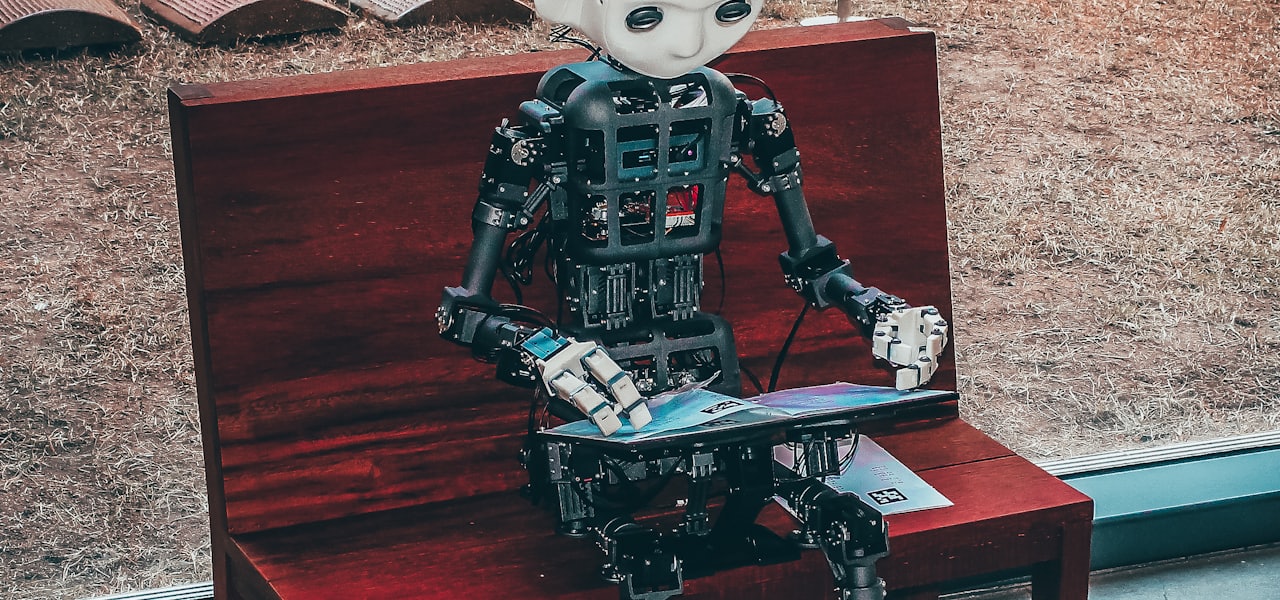
Nouvelle artificial intelligence (Nouvelle AI) is an approach to artificial intelligence pioneered in the 1980s by Rodney Brooks, who was then part of MIT artificial intelligence laboratory. Nouvelle AI differs from classical AI by aiming to produce robots with intelligence levels similar to insects. Researchers believe that intelligence can emerge organically from simple behaviors as these intelligences interacted with the "real world", instead of using the constructed worlds which symbolic AIs typically needed to have programmed into them. == Motivation == The differences between nouvelle AI and symbolic AI are apparent in early robots Shakey and Freddy. These robots contained an internal model (or "representation") of their micro-worlds consisting of symbolic descriptions. As a result, this structure of symbols had to be renewed as the robot moved or the world changed. Shakey's planning programs assessed the program structure and broke it down into the necessary steps to complete the desired action. This level of computation required a large amount time to process, so Shakey typically performed its tasks very slowly. Symbolic AI researchers had long been plagued by the problem of updating, searching, and otherwise manipulating the symbolic worlds inside their AIs. A nouvelle system refers continuously to its sensors rather than to an internal model of the world. It processes the external world information it needs from the senses when it is required. As Brooks puts it, "the world is its own best model--always exactly up to date and complete in every detail." A central idea of nouvelle AI is that simple behaviors combine to form more complex behaviors over time. For example, simple behaviors can include elements like "move forward" and "avoid obstacles." A robot using nouvelle AI with simple behaviors like collision avoidance and moving toward a moving object could possibly come together to produce a more complex behavior like chasing a moving object. === The frame problem === The frame problem describes an issue with using first-order logic (FOL) to express facts about a robot in the world. Representing the state of a robot with traditional FOL requires the use of many axioms (symbolic language) to imply that things about an environment do not change arbitrarily. Nouvelle AI seeks to sidestep the frame problem by dispensing with filling the AI or robot with volumes of symbolic language and instead letting more complex behaviors emerge by combining simpler behavioral elements. === Embodiment === The goal of traditional AI was to build intelligences without bodies, which would only have been able to interact with the world via keyboard, screen, or printer. However, nouvelle AI attempts to build embodied intelligence situated in the real world. Brooks quotes approvingly from the brief sketches that Turing gave in 1948 and 1950 of the "situated" approach. Turing wrote of equipping a machine "with the best sense organs that money can buy" and teaching it "to understand and speak English" by a process that would "follow the normal teaching of a child." This approach was contrasted to the others where they focused on abstract activities such as playing chess. == Brooks' robots == === Insectoid robots === Brooks focused on building robots that acted like simple insects while simultaneously working to remove some traditional AI characteristics. He created insect-like robots, named Allen and Herbert after cognitive science and AI pioneers Allen Newell and Herbert A. Simon. Brooks's insectoid robots contained no internal models of the world. Herbert, for example, discarded a high volume of the information received from its sensors and never stored information for more than two seconds. ==== Allen ==== Allen had a ring of twelve ultrasonic sonars as its primary sensors and three independent behavior-producing modules. These modules were programmed to avoid both stationary and moving objects. With only this module activated, Allen stayed in the middle of a room until an object approached and then it ran away while avoiding obstacles in its way. ==== Herbert ==== Herbert used infrared sensors to avoid obstacles and a laser system to collect 3D data over a distance of about 12 feet. Herbert also carried a number of simple sensors in its "hand." The robot's testing ground was the real world environment of the busy offices and workspaces of the MIT AI lab where it searched for empty soda cans and carried them away, a seemingly goal-oriented activity that emerged as a result of 15 simple behavior units combining. As a parallel, Simon noted that an ant's complicated path is due to the structure of its environment rather than the depth of its thought processes. ==== Other insectoid robots ==== Other robots by Brooks' team were Genghis and Squirt. Genghis had six legs and was able to walk over rough terrain and follow a human. Squirt's behavior modules had it stay in dark corners until it heard a noise, then it would begin to follow the source of the noise. Brooks agreed that the level of nouvelle AI had come near the complexity of a real insect, which raised a question about whether or not insect level-behavior was and is a reasonable goal for nouvelle AI. === Humanoid robots === Brooks' own recent work has taken the opposite direction to that proposed by Von Neumann in the quotations "theorists who select the human nervous system as their model are unrealistically picking 'the most complicated object under the sun,' and that there is little advantage in selecting instead the ant, since any nervous system at all exhibits exceptional complexity." ==== Cog ==== In the 1990s, Brooks decided to pursue the goal of human-level intelligence and, with Lynn Andrea Stein, built a humanoid robot called Cog. Cog is a robot with an extensive collection of sensors, a face, and arms (among other features) that allow it to interact with the world and gather information and experience so as to assemble intelligence organically in the manner described above by Turing. The team believed that Cog would be able to learn and able to find a correlation between the sensory information it received and its actions, and to learn common sense knowledge on its own. As of 2003, all development of the project had ceased.